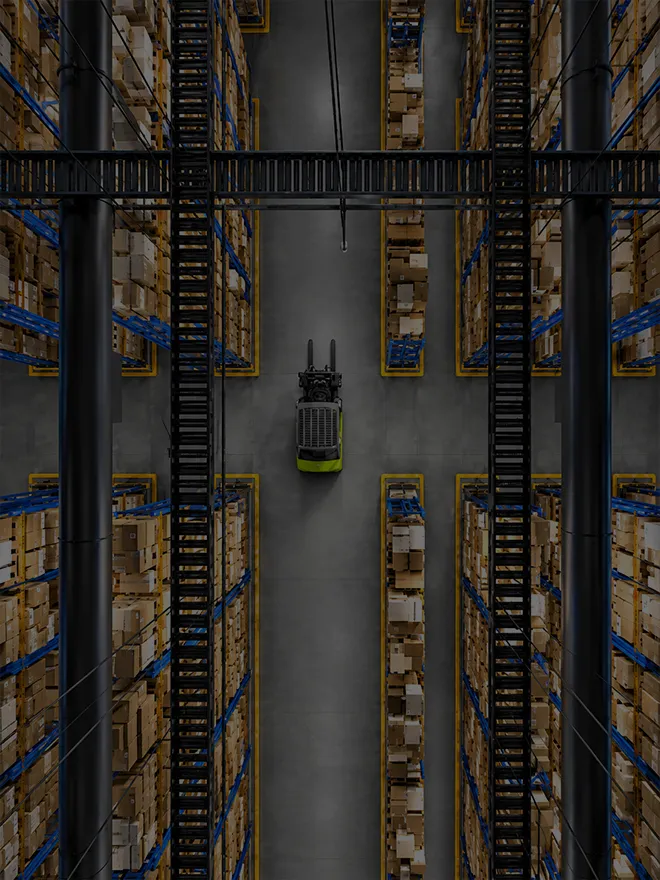
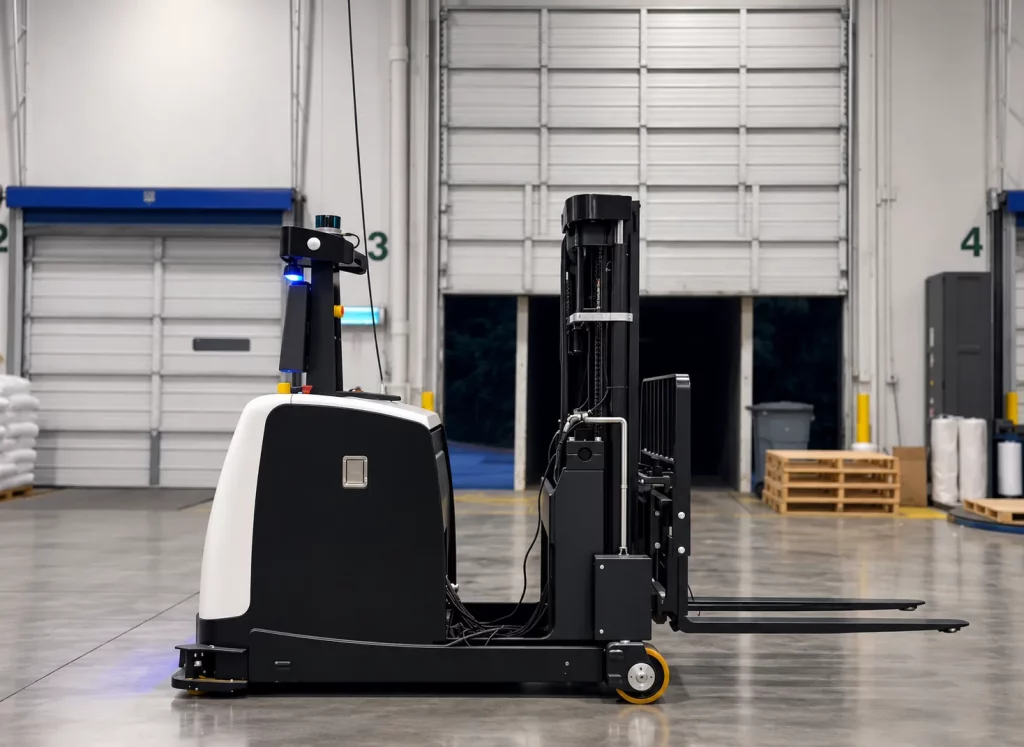
On September 14, 2024, installation and commissioning activities were underway for an AGV stacker project in the United States. On-site testing involved pallet handling, turning and travel through a warehouse loading doorway.
The work focused on checking equipment movement within the actual site layout, including travel routes, pallet positions and access between handling areas.
On-Site Travel and Pallet Handling
The AGV stacker carried out turning and pallet transport movements in the warehouse loading area. With a wooden pallet supported on its forks, the equipment approached the open loading doorway, traveled through it and subsequently returned to the warehouse floor.
These operating movements form part of the commissioning process, helping assess approach alignment, turning clearance and travel between connected work areas.
Operation Around Warehouse Loading Bays
The installation environment includes multiple loading bays and nearby pallet storage. Equipment movement through this area requires consideration of doorway clearance, floor conditions and the position of surrounding materials.
On-site commissioning provides an opportunity to check the planned route against these working conditions and identify where adjustments may be needed.
Coordinating the Equipment and Site Layout
AGV stacker installation requires coordination between the equipment, pallets and facility layout. Pickup and drop-off positions, load dimensions, travel paths and surrounding traffic all need to be considered when preparing a handling task.
The U.S. project’s installation and commissioning activities bring these factors together at the customer’s site, allowing equipment operation to be assessed under local conditions.
Discuss Your AGV Stacker Requirements
Planning an AGV stacker project? Share your pallet dimensions, load weight, required lift height and warehouse layout to discuss equipment selection and installation requirements.
FAQ
Where and when did the AGV stacker installation and commissioning take place?
The project took place at a U.S. facility, with on-site installation and commissioning activities documented on September 14, 2024.
What operating tasks were tested on site?
On-site testing included turning, transporting a wooden pallet and traveling through a warehouse loading doorway. These tasks allowed equipment movement to be assessed within the actual facility layout.
Why is on-site commissioning important for an AGV stacker project?
On-site commissioning helps check how the equipment works with the facility’s travel routes, pallet positions, doorway clearances and floor conditions. It also provides an opportunity to identify adjustments before routine operation.
What information is needed to plan an AGV stacker installation?
Key information includes pallet dimensions, load weight, required lift height, pickup and drop-off positions, warehouse layout and travel routes. Floor conditions and interaction with other site traffic should also be reviewed.
Does commissioning mean the AGV stacker is ready for production?
Commissioning is part of preparing the equipment for operation. Production readiness should be confirmed after the agreed functional tests, site checks and project acceptance procedures have been completed.



 Get a Quote

 October 23, 2026