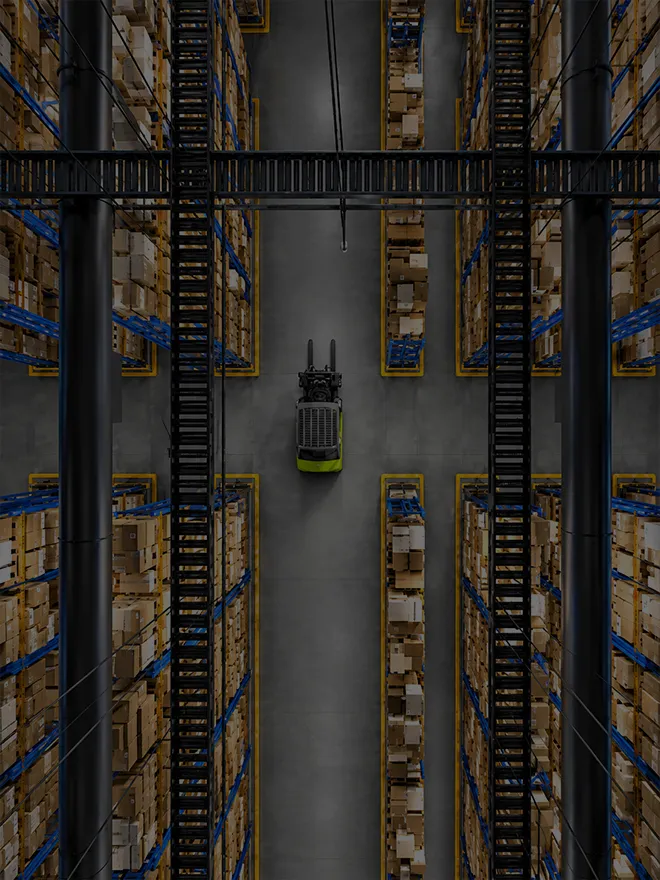
Efficient and low-cost material transportation is a significant measure for many manufacturing plants and warehouses to improve operations. AGVs can achieve efficient and low-cost material transportation, and in terms of safety, AGVs are very safe compared to other material transportation methods, especially when compared to manual handling.
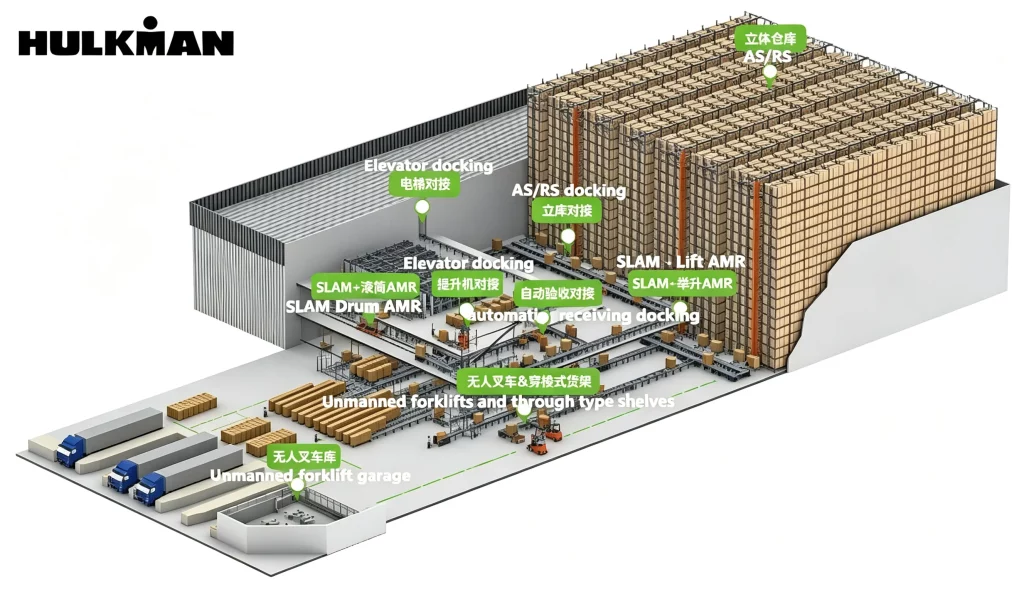
How is such high safety achieved by AGVs?Below, we will explain that AGVs are equipped with many safety devices to prevent accidents, such as flashing lights, audio devices, physical emergency bumpers, infrared sensors, and ultrasonic devices.
How to avoid collisions between AGVs running on the same path? This involves traffic control. For example, a flexible manufacturing system with multiple AGVs requires traffic control to ensure that AGVs do not collide with each other. Traffic control can be executed locally on the AGVs or through software on a fixed computer elsewhere in the factory.
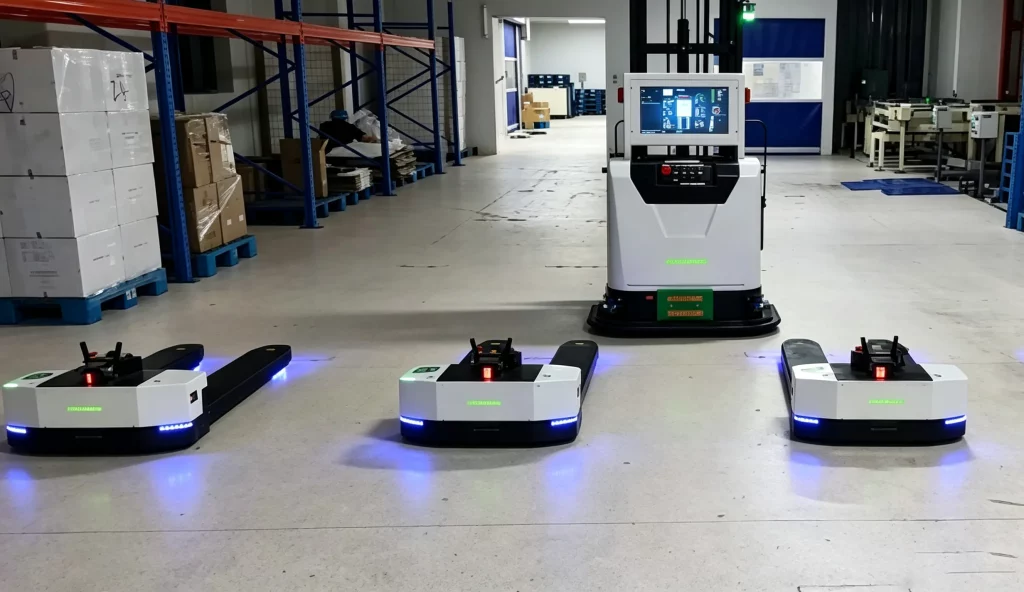
1. How Does AGV Zone Control Prevent Collisions?
Zone control is the most preferred method in most environments because it is simple to install and easy to expand. Zone control uses wireless transmitters to send signals within a fixed area. Each AGV contains a sensor to receive the signal and respond to the transmitter. If a zone is empty, the signal is set to “clear,” allowing any AGV to enter and pass through the zone. If an AGV is in the zone, a “stop” signal is sent, and all AGVs attempting to enter the zone will stop and wait for their turn.
Once the AGV in the zone has moved out, a “clear” signal is immediately sent to one of the waiting AGVs. Another way to establish zone control traffic management is to equip each robot with its own small transmitter/receiver. Each AGV sends its own “do not enter” message to all AGVs approaching its spatial area. A problem with this method is that if a zone fails, all AGVs are at risk of colliding with each other. Zone control is a low-cost and effective method for managing AGVs in specific areas.
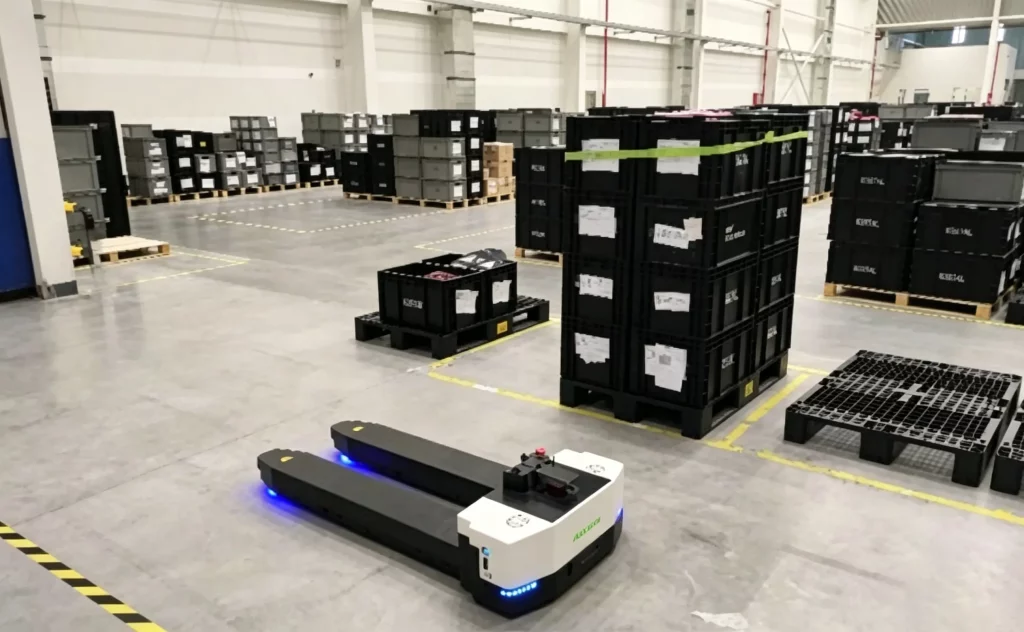
2. How Do AGV Sensors Support Obstacle Avoidance?
Sensor control uses obstacle-detection devices to help prevent AGVs from colliding with other vehicles, equipment or objects in the operating area.
Common AGV safety sensors include ultrasonic sensors, optical sensors and physical bumper sensors. Most AGVs are equipped with some form of bumper sensor as a fail-safe safety device.
Ultrasonic sensors operate in a way similar to radar. They emit high-frequency signals and wait for a response. By analyzing the reflected signal, the AGV can determine whether an obstacle is located ahead and take the necessary action to avoid a collision.
Optical sensors use infrared transmitters and receivers. An infrared signal is emitted and reflected back when it reaches an object. This allows the AGV to detect obstacles using a principle similar to that of ultrasonic sensing.
Although these sensors provide important protection, they normally cover only a limited detection angle. Sensor placement and coverage therefore play an important role in the overall AGV safety system.
3. How Does Integrated AGV Safety Control Work?
Integrated control combines zone control with collision-avoidance sensors. Using both methods creates multiple layers of protection and helps reduce collision risks under different operating conditions.
During normal operation, zone control manages traffic and determines which AGV can enter a controlled area. Obstacle-avoidance sensors act as a fail-safe layer. If the zone control system fails, the sensors can still detect obstacles and help protect the AGV from a collision.
In an integrated traffic-control system, each AGV can be equipped with two infrared obstacle-avoidance sensors. One sensor is positioned at the front to detect obstacles ahead, while another is installed at the front-right to detect vehicles approaching from the side.
The dispatch center also establishes mutual-exclusion signals in areas where collisions are more likely to occur. When an AGV enters one of these areas, it occupies the mutual-exclusion signal. The dispatch center then sends a stop command to other AGVs attempting to enter.
After the first AGV leaves the area, the mutual-exclusion signal is released, allowing the next AGV to proceed. This combination of centralized traffic management and onboard sensors improves safety when several AGVs operate within the same facility.
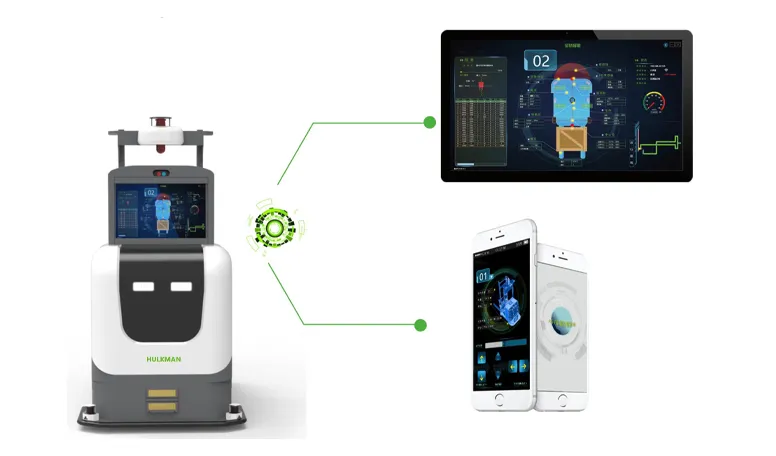
The Role of AGV Safety in Modern Logistics
AGVs are an important technology in modern logistics and manufacturing. In addition to improving material transportation, they can help increase production efficiency, reduce labor costs, support more refined operational management and improve logistics flexibility.
Their safety depends on the coordinated use of warning devices, physical bumpers, obstacle-detection sensors, zone control and dispatch software. Together, these systems help AGVs move materials automatically while reducing risks to vehicles, equipment and personnel.
As AGV technology continues to develop, automated guided vehicles are expected to support a wider range of industrial applications and create greater value for manufacturing plants, warehouses and logistics operations.
FAQ
Are AGVs safe for automatic material transportation?
Yes. AGVs use multiple safety devices, including warning lights, audible alarms, emergency bumpers and obstacle-detection sensors. Their safety also depends on correct route planning, traffic control and operating rules.
What safety devices are commonly installed on AGVs?
Common AGV safety devices include flashing lights, audible warning devices, physical emergency bumpers, infrared sensors and ultrasonic sensors.
How do AGVs avoid obstacles?
AGVs use ultrasonic, infrared and contact sensors to detect obstacles. When an object is detected, the control system can slow down or stop the AGV to reduce the risk of a collision.
What is AGV zone control?
Zone control divides the operating area into controlled sections. When one AGV enters a zone, other AGVs are instructed to stop and wait until the zone becomes available.



 Get a Quote

 September 09, 2026