
 Get a Quote
AGV and AMR solutions for automated pallet movement, material transfer, warehouse handling, and smart manufacturing workflows.


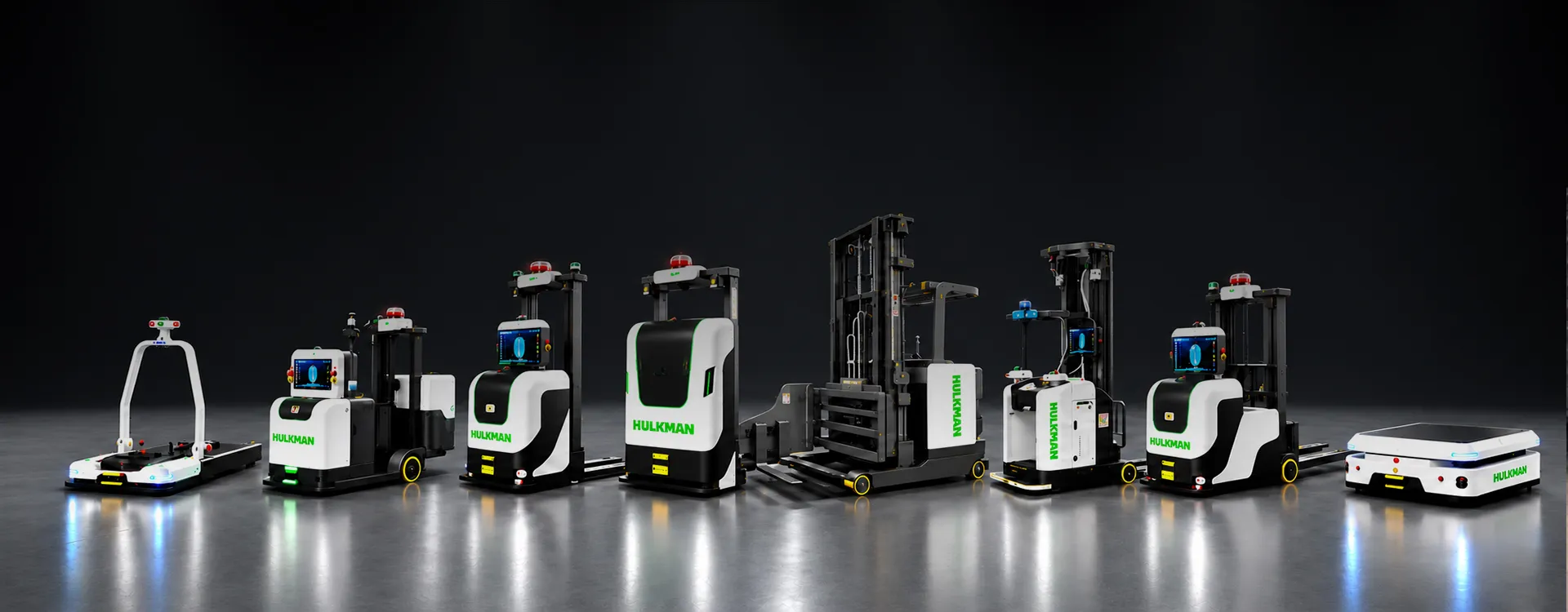
AGV and AMR solutions for automated pallet movement, material transfer, warehouse handling, and smart manufacturing workflows.
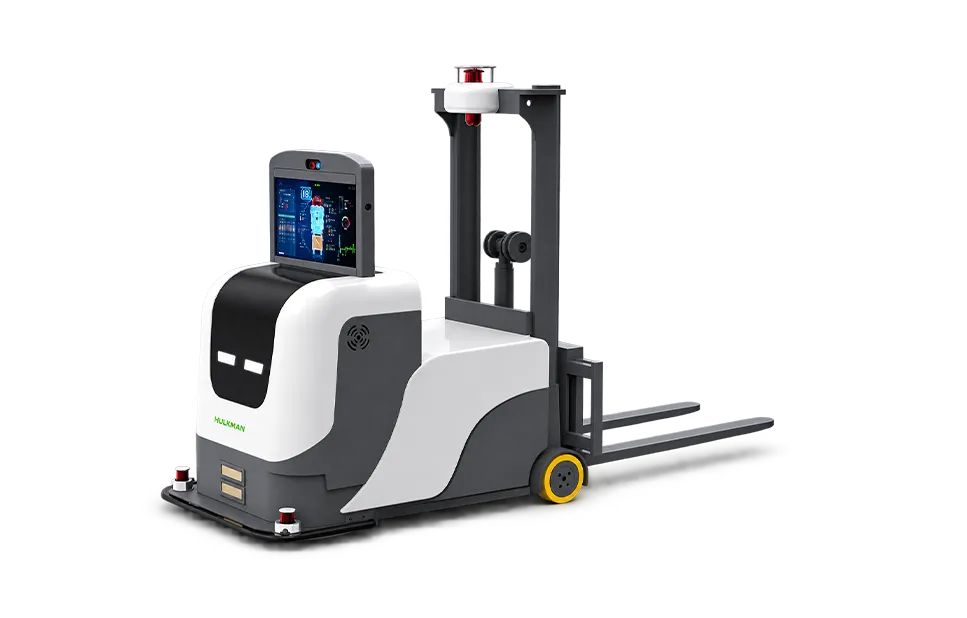
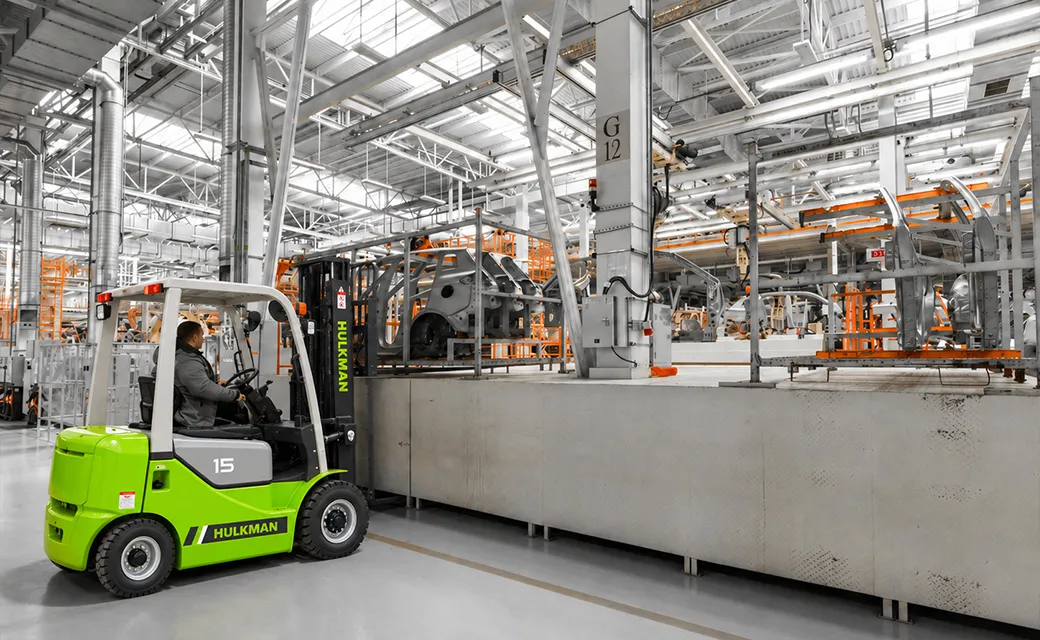
The HULKMAN LDB1500C is a 1.5 ton AGV counterbalanced stacker for autonomous pallet picking, transport, lifting and placement. Its counterbalanced structure supports closed-type pallets, while Laser SLAM navigation, ±10 mm positioning accuracy and automatic charging support configured warehouse and production logistics.
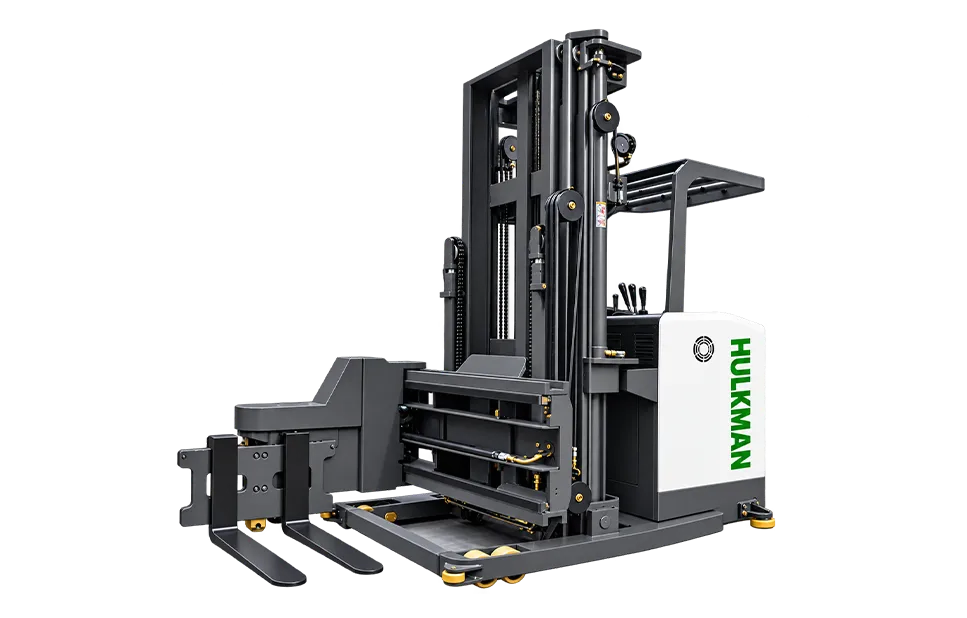
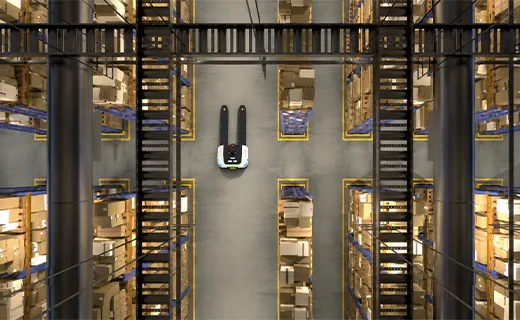
The HULKMAN 1 ton 1.5 ton three-way AGV forklift is designed for automated pallet storage and retrieval in very narrow aisle warehouses. The LVNA1000 and LVNA1500 combine three-way fork handling, a listed 6000 mm lifting height, laser navigation and a 1760 mm reference stacking aisle.
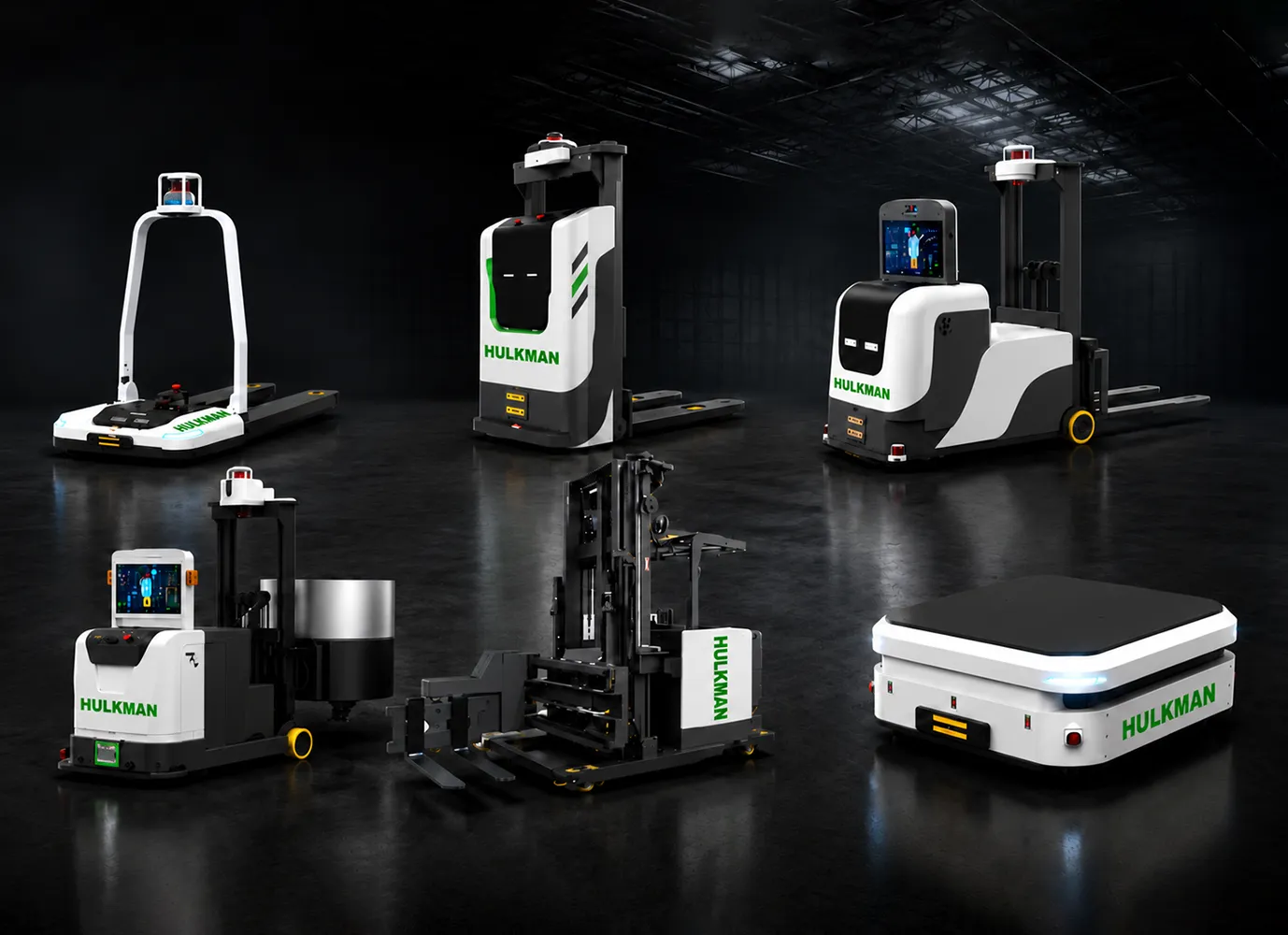
HULKMAN smart logistics robots include Automated Guided Vehicles (AGVs) and Autonomous Mobile Robots (AMRs) for different automated material-transfer tasks.
Automated material handling involves more than moving goods from one point to another. The appropriate robot must match the load, pickup method, travel route, positioning requirement, storage layout, and surrounding automation equipment.
HULKMAN’s smart logistics robot range covers AGV pallet trucks, stackers, reach trucks, tri-lateral forklifts, chassis vehicles, and AMRs. Different robot forms are available for pallet movement, stacking, rack handling, production-line transfer, and other internal logistics tasks.
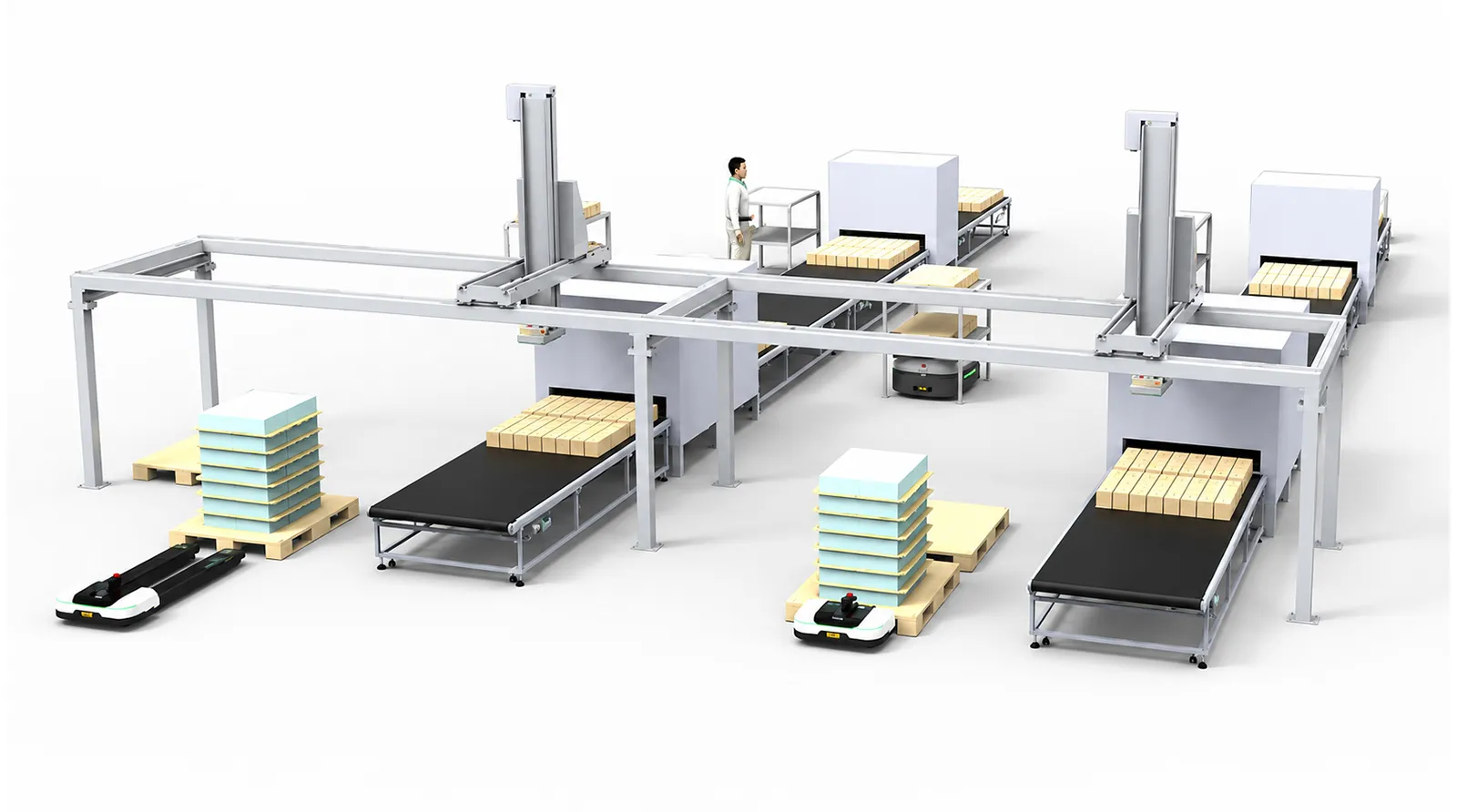
HULKMAN provides both AGV and AMR platforms for automated material handling. Different robot forms allow the solution to be selected according to load type, transfer method, route requirements, and the level of flexibility required by the operation.
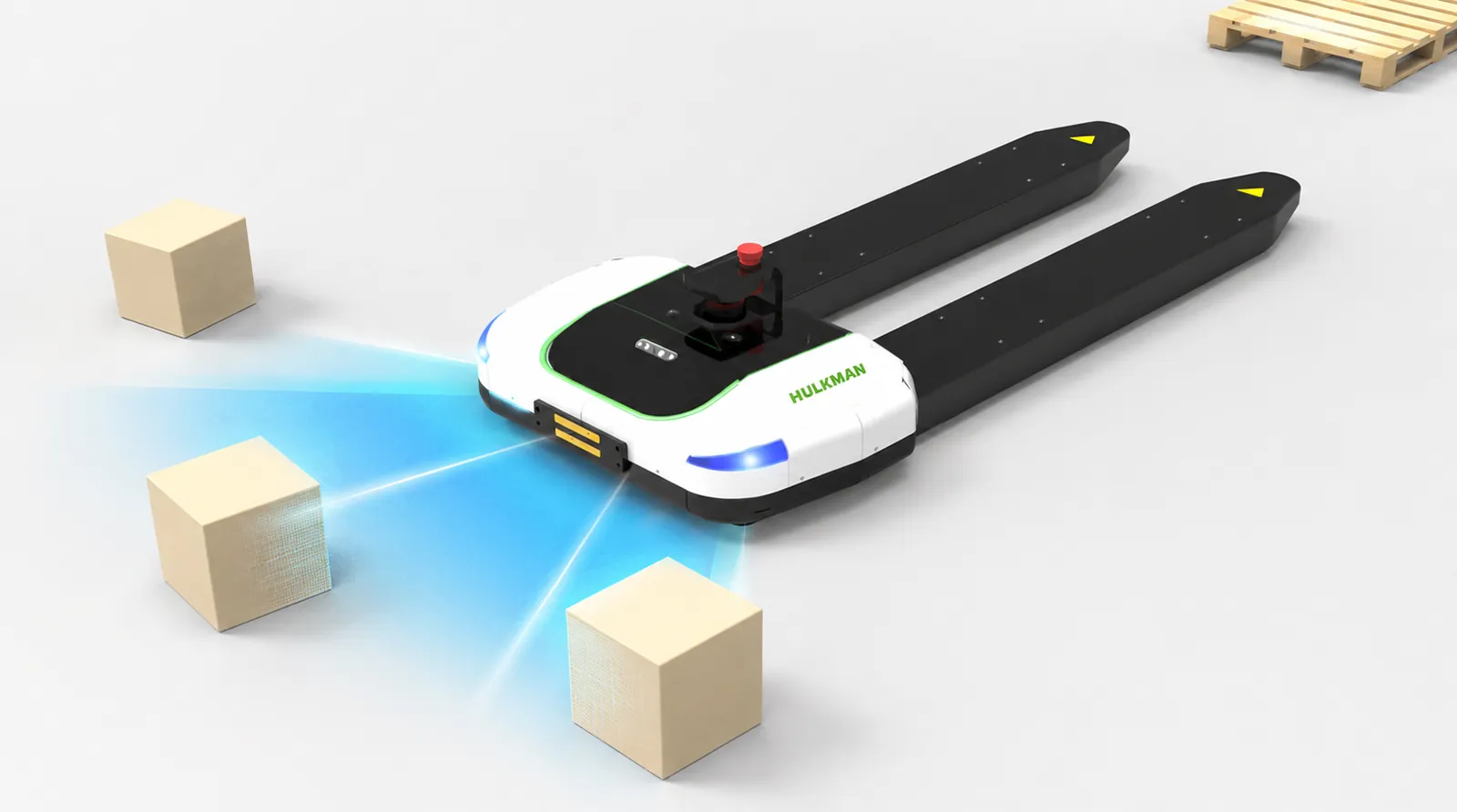
HULKMAN robot solutions include positioning and navigation technologies for autonomous or guided movement within the planned operating environment. The appropriate navigation method is selected according to the robot, site conditions, route, and project requirements.
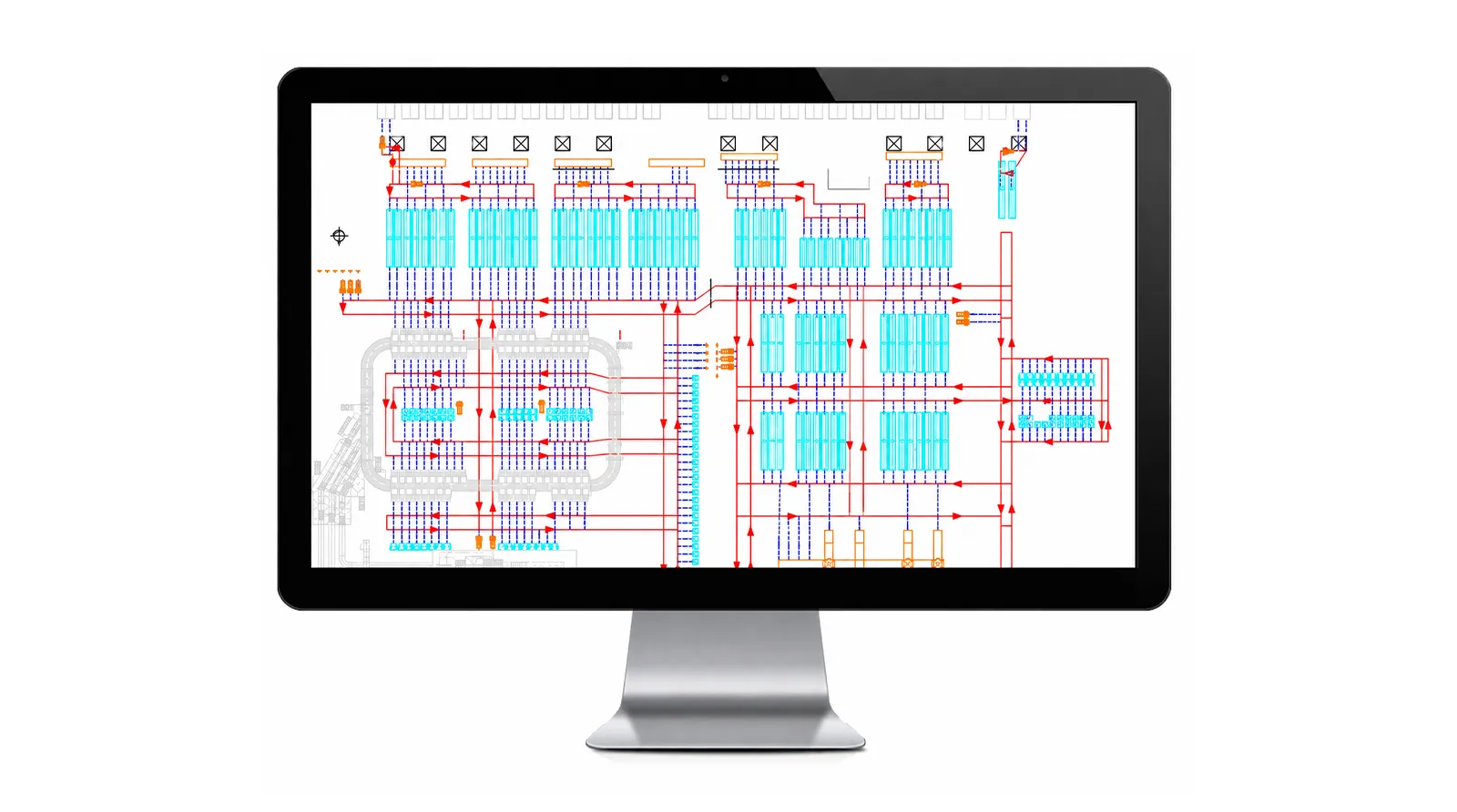
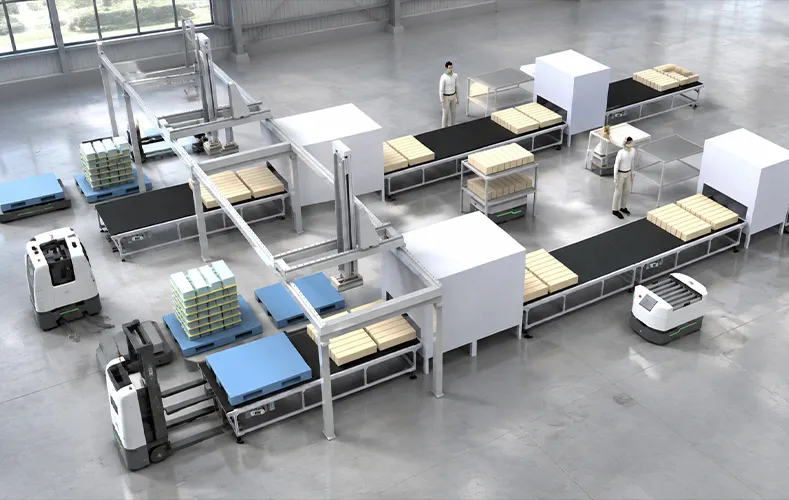
For multi-robot projects, a central dispatching system can coordinate robot tasks and material-transfer routes. The final fleet logic is planned according to the number of robots, traffic flow, pickup points, delivery points, and customer workflow.
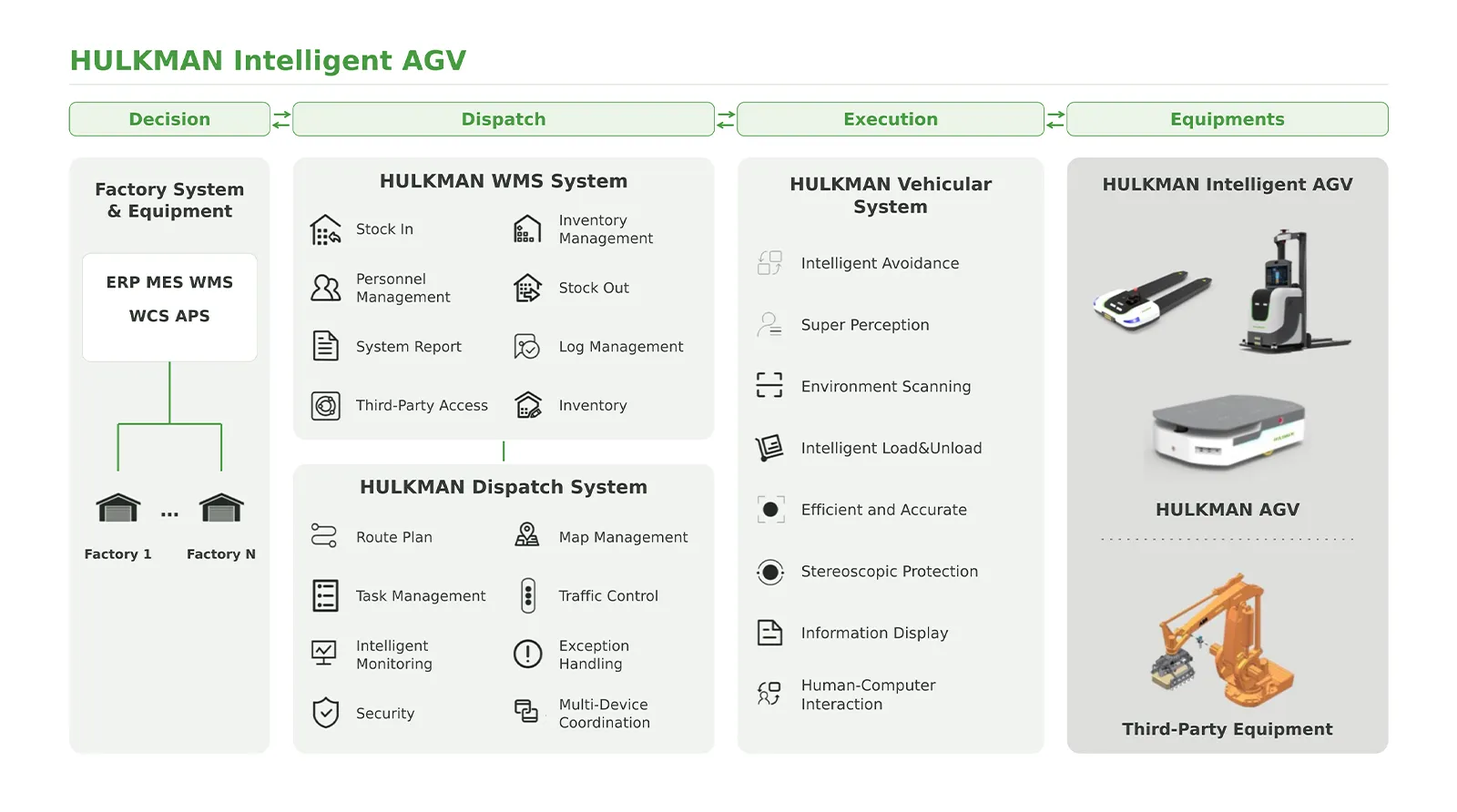
HULKMAN smart logistics solutions can be planned to connect with existing WMS, MES, or ERP environments. Interface requirements, data exchange, task logic, and integration scope are confirmed according to the customer’s existing systems.

Share the load, material dimensions, pickup and delivery points, travel routes, required throughput, site layout, floor conditions, and existing automation systems so the appropriate AGV or AMR direction can be evaluated.

The robot platform, load capacity, navigation method, charging arrangement, safety configuration, pickup method, and scheduling requirements are reviewed according to the confirmed application.

For integrated projects, HULKMAN can review the required connection with WMS, MES, ERP, production systems, conveyors, RFID, scanners, and other equipment. Final interfaces depend on the customer’s existing software and project scope.

Support can continue through solution confirmation, equipment preparation, system coordination, deployment, testing, and later technical communication according to the agreed project scope.

Technical Q&A & Application Guidelines


A smart logistics robot is used to automate material movement within warehouses, factories, and other internal logistics environments. HULKMAN’s current product system includes both Automated Guided Vehicles (AGVs) and Autonomous Mobile Robots (AMRs), with different robot forms for pallet transport, stacking, rack handling, and flexible material transfer.
An AGV typically follows predefined routes using magnetic tape, wires, QR codes, reflectors, or other guidance systems. When its path is blocked, it generally stops and waits, and changing the route may require adjustments to the guidance layout or system configuration.
An AMR uses onboard sensors, mapping, and localization technology to understand its surroundings and plan or adjust routes dynamically. It can navigate around many obstacles and adapt more easily to changes in facility layouts and workflows.
AGVs are generally suited to stable, repetitive transport routes, while AMRs offer greater flexibility for dynamic warehouse and manufacturing environments.
HULKMAN’s current smart logistics range includes AGV pallet trucks, narrow-aisle stackers, electric stackers, counterbalanced stackers, reach trucks, tri-lateral forklifts, and AGV chassis vehicles. Available load capacities and configurations depend on the selected product.
Yes. HULKMAN smart warehousing solutions can be planned to connect with existing WMS, MES, or ERP systems. The final integration depends on the customer’s software environment, available interfaces, task logic, and project requirements.
Provide the material weight and dimensions, pickup and delivery points, site layout, travel routes, floor condition, working hours, required task frequency, charging conditions, existing equipment, and any WMS, MES, ERP, conveyor, RFID, or scanning systems that need to be connected.
AGV forklift price depends on the robot type, load capacity, navigation and positioning requirements, battery and charging system, safety configuration, pickup mechanism, software functions, fleet size, system interfaces, and deployment scope. A project quotation should therefore be based on confirmed operating and integration requirements.
Yes. HULKMAN positions its AGV business around configurable warehouse and manufacturing automation solutions. Robot type, handling method, navigation, dispatching, software interfaces, and connected equipment can be reviewed according to the confirmed application and project requirements.
First, separate the load-handling requirement from the navigation requirement. Tasks involving pallet pickup, lifting, or rack stacking require a forklift or stacker-type vehicle, which can use either AGV or AMR navigation technology.
An AGV-based solution is generally suitable for stable, repetitive routes in controlled environments where predefined paths and route infrastructure are acceptable. An AMR-based solution offers greater flexibility when destinations change frequently, layouts are regularly modified, or vehicles must dynamically adjust their routes around traffic and obstacles.
The final selection should consider load weight and load center, pallet and rack interface, lifting height, aisle width, positioning accuracy, cycle time, traffic conditions, charging strategy, safety requirements, and integration with WMS, MES, or WCS platforms.

*We respect your confidentiality and all information are protected We will only use your information to respond to your inquiry and will never send unsolicited emails or promotional messages.
We will reply you within 24 hours. If for urgent case, please add WhatsApp/WeChat: +86 150 9870 9389,Or call +86 150 9870 9389 directly.
*We respect your confidentiality and all information are protected.
We will only use your information to respond to your inquiry and will never send unsolicited emails or promotional messages.